What is Architectural Engineering?
 Architectural engineering has two branches,
structural and mechanical. Mechanical architectural engineers design the guts
and tubes of a building, everything from the plumbing to the air conditioning.
Structural architectural engineers design the building’s skeleton. We ensure
that even when someone stuffs a closet full of bowling balls, the floor doesn’t
give out. I’m studying the structural branch for my bachelor’s.
Architectural engineering has two branches,
structural and mechanical. Mechanical architectural engineers design the guts
and tubes of a building, everything from the plumbing to the air conditioning.
Structural architectural engineers design the building’s skeleton. We ensure
that even when someone stuffs a closet full of bowling balls, the floor doesn’t
give out. I’m studying the structural branch for my bachelor’s.
What do Structural Engineers do?
As a structural engineer, we have to understand the behavior of materials. There are four main materials to choose from: masonry, wood, concrete and steel. We have to understand the strengths and weaknesses of each, know how they break, and in general understand how they react to the pressures and strains they are subjected to in a building.
 We also need to know what forces a building undergoes.
Pianos, bookcases, and air conditioners are all heavy. The structure of the
building must support them all. Outside, snow threatens to collapse the roof
and wind presses against the exterior walls. Earthquakes and hurricanes
threaten to rip buildings apart. All of these, and more, must be considered
when designing a school, a bridge, or a house.
We also need to know what forces a building undergoes.
Pianos, bookcases, and air conditioners are all heavy. The structure of the
building must support them all. Outside, snow threatens to collapse the roof
and wind presses against the exterior walls. Earthquakes and hurricanes
threaten to rip buildings apart. All of these, and more, must be considered
when designing a school, a bridge, or a house.
The most important part of structural engineering,
though, is always the bottom line. While a building with columns twice as thick
is less likely to fall down, there’s a point where increasing the size of the
beams only makes the building more expensive, not safer. Structural engineers
need to find affordable solutions as well as ones that work. Because no matter
how impressive or redundant a building design is, if it’s too expensive it
won’t be built.
Why it’s Awesome
 Structural engineers get to have fun. Creativity
plays a significant role in structural engineering because the most obvious
solution might not be the best one. Other times, the straightforward solution
is artistically boring. In these cases, such as the departure concourse in
Kings Cross Station, London, the engineers transformed the structure into a
piece of art. So the next time you see a beautiful building, find yourself on
the fiftieth floor of a skyscraper, or driving over a suspension bridge, you
can thank a structural engineer.
Structural engineers get to have fun. Creativity
plays a significant role in structural engineering because the most obvious
solution might not be the best one. Other times, the straightforward solution
is artistically boring. In these cases, such as the departure concourse in
Kings Cross Station, London, the engineers transformed the structure into a
piece of art. So the next time you see a beautiful building, find yourself on
the fiftieth floor of a skyscraper, or driving over a suspension bridge, you
can thank a structural engineer.
Your writing makes this subject matter interesting! Now, I have a better understanding of what structural engineering is and how it differs from mechanical engineering. I'd like to take this moment to thank a structural engineer that the blasted snow piled on my roof isn't making the ceiling crashing down on me and that the blasted wind isn't blowing down this apartment like a big bad wolf. Thank you.
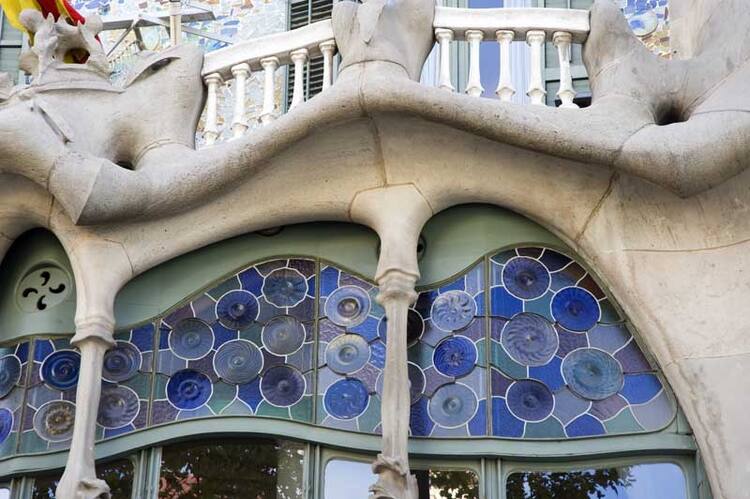
ReplyDeleteI was very interested in architecture growing up, so your post was very interesting to me. I have actually seen Gaudi's buildings in Spain, including the one you have pictured, and they are exactly as you describe. They are structurally sound , but they are also works of art. Architecture is a cool blend of creativity and physics, and I appreciate your description of this awesome field.
ReplyDeleteI didn't realize something like this could be so fascinating. Many years ago I briefly flirted with the idea of going into architecture, but changed my mind pretty quickly. Now more than ever, though, I can see the joy in this field. Also, in your post, I loved the picture of the Gaudi building. I've always found his work memorable, to say the least.
ReplyDelete